“We wake up with a plan for the day, and by 10 that's usually completely changed.”
Emily Elgar is a British veterinary nurse who has dedicated her professional life to The Gambia’s wildlife. As co-founder of The Gambia Wildlife Foundation, her daily life is an unpredictable mix of roles as architect, engineer, fundraiser, administrative jack-of-all-trades, and everything in between. The center of it all is, of course, animal care - both in her work with improving conditions at Abuko Nature Reserve and when unexpected tasks throw a wrench into the day’s plans.
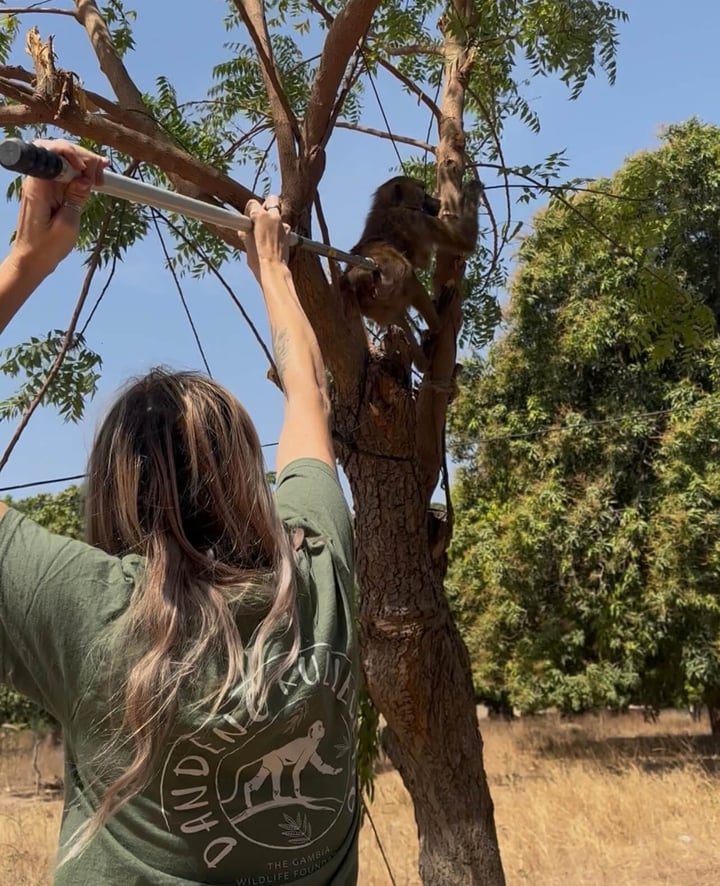
“Recently, we were contacted when 21 baboons had raided a faraway village. The baboons had been disturbed from their normal habitat by rebel fighting and had moved across the forest and the farmland, but because of the deforestation, there was no fruit left in the bush. So the only place they could find food was the village,” Emily Elgar explains.
Happy to take advice
The villagers had captured 21 of the baboons and chained them. Working alongside a team of rangers from the wildlife department, Emily Elgar’s task was to get the baboons out of the village again without harming either the animals or the rangers.
“The guys are brave and tough, and in the past, they would have just gone in and used force and grabbed the baboons with high stress for the animal and a high risk of getting bitten. But because of the rapport we’ve built over time, they are happy to take our advice, and I always tell them that I'm not just here to help the animals but also to look after their safety. None of the rangers are vaccinated against rabies, so it’s a real risk if they get bitten or scratched”, she says.
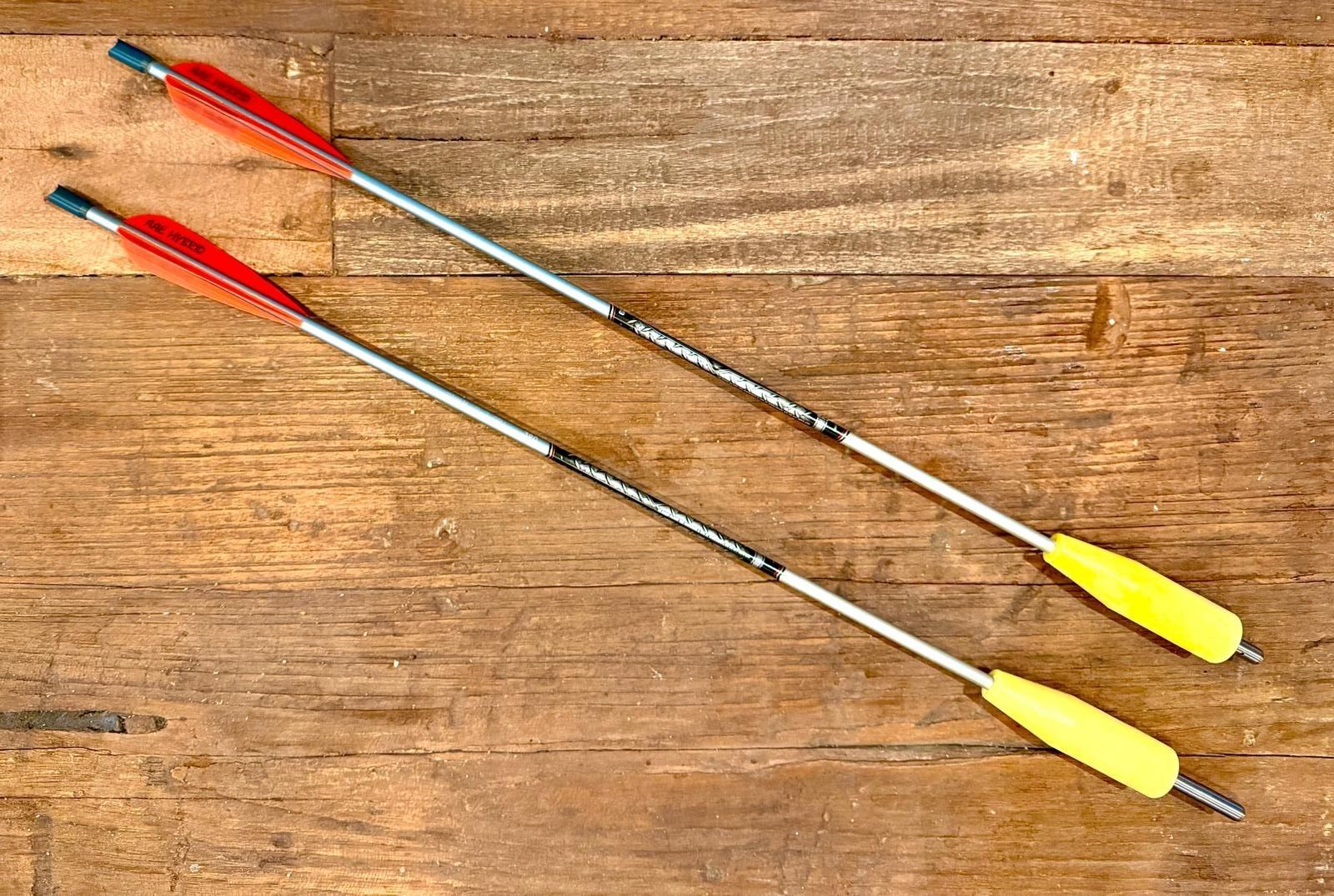
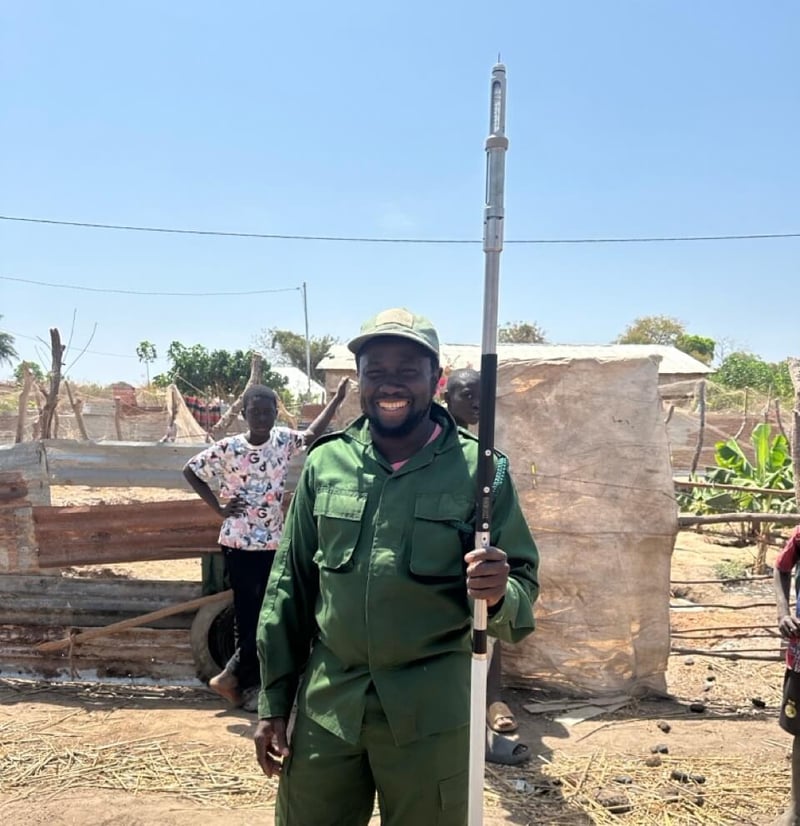 In a case like this, the team’s DANiNJECT jabstick proves very useful.
“We could immobilize the baboon, wait 10 minutes, and then the rangers could handle it without risk for the animal or themselves. And since this was such a large-scale rescue, everyone got to use the jabstick and get a feel for how it works and understand how it benefits them, not just the animal,” Emily Elgar explains.
Inspiring the local team
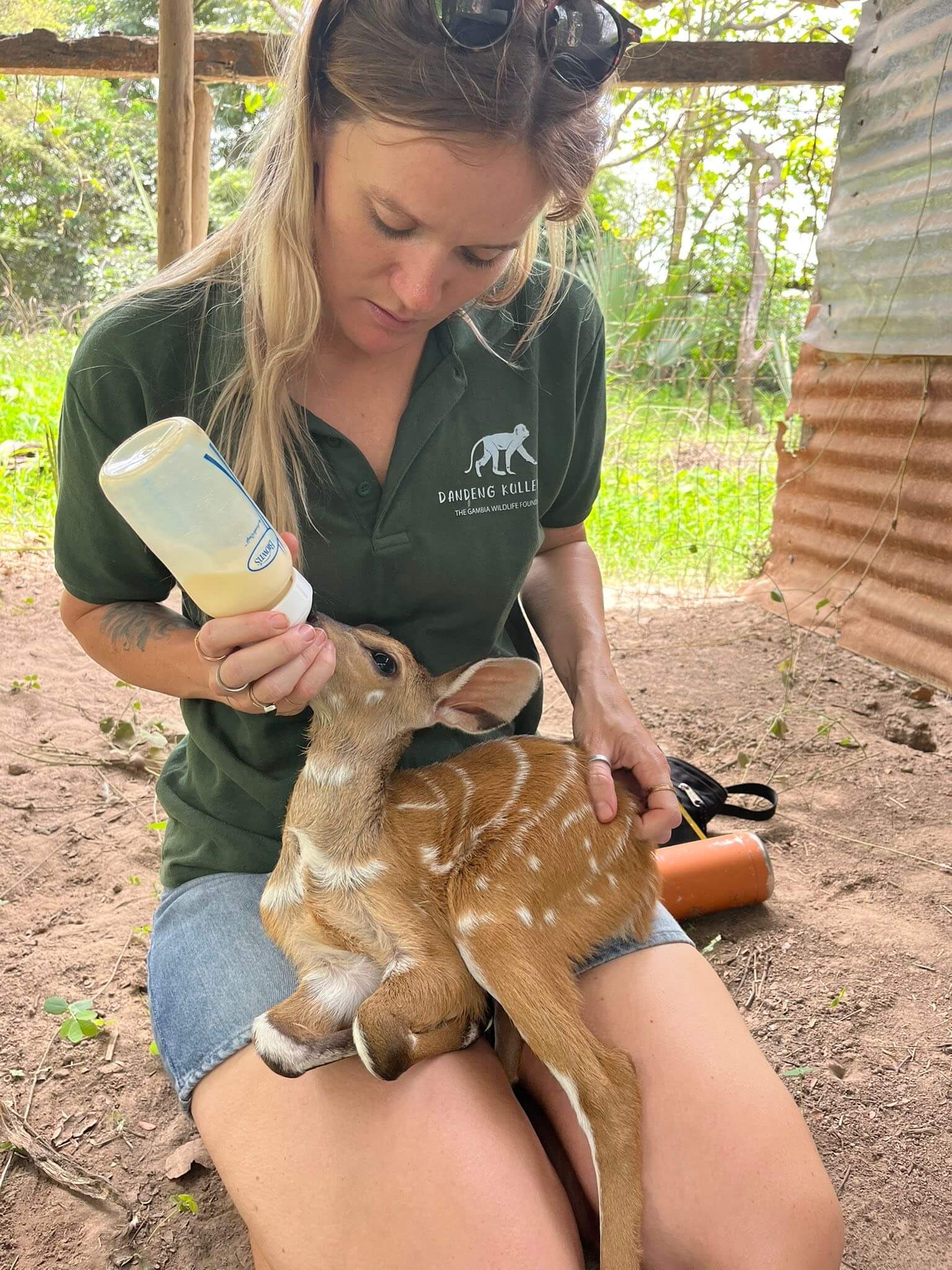
Educating local rangers and vets is an important part of Emily Elgar's work, also in the foundation’s primary project in Abuko Nature Reserve’s zoo, where the foundation works hand in hand with the government wildlife department. Before Emily and her team got involved, the zoo was in bad shape.
“Before, when you drove into Abuko, you'd just get filled with dread. The animals would have no water, you would most likely find a dead animal or a very sick animal, and there'd be a whole team of demotivated staff sitting around. So, one of the first things we did was to sit down with the director, the management, and the ground team and ask what they needed to make their jobs easier. We expected them to ask for a motorbike or iPhones, but they just wanted new work gloves and some machetes. We thought, ‘Perfect, this we can help with straight away’. So we brought those and could just see how their shoulders were a bit higher, and there were smiles on their faces. So, we focused on helping with these basic things and inspiring the team on the ground to take pride in their work by including them in what we do and by training them in animal care. If we can help build those bonds between the staff and the animals, they're going to care about the work more.”
Jabstick has saved hyenas
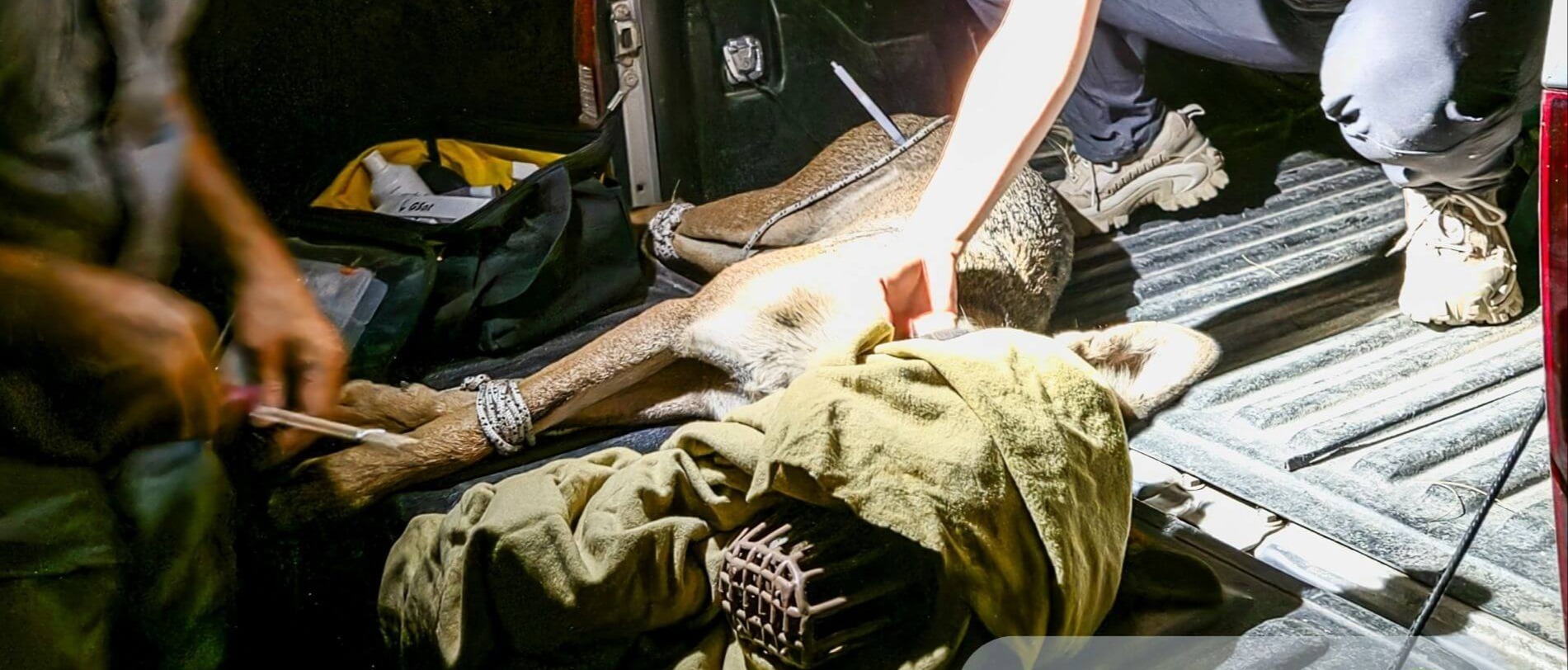
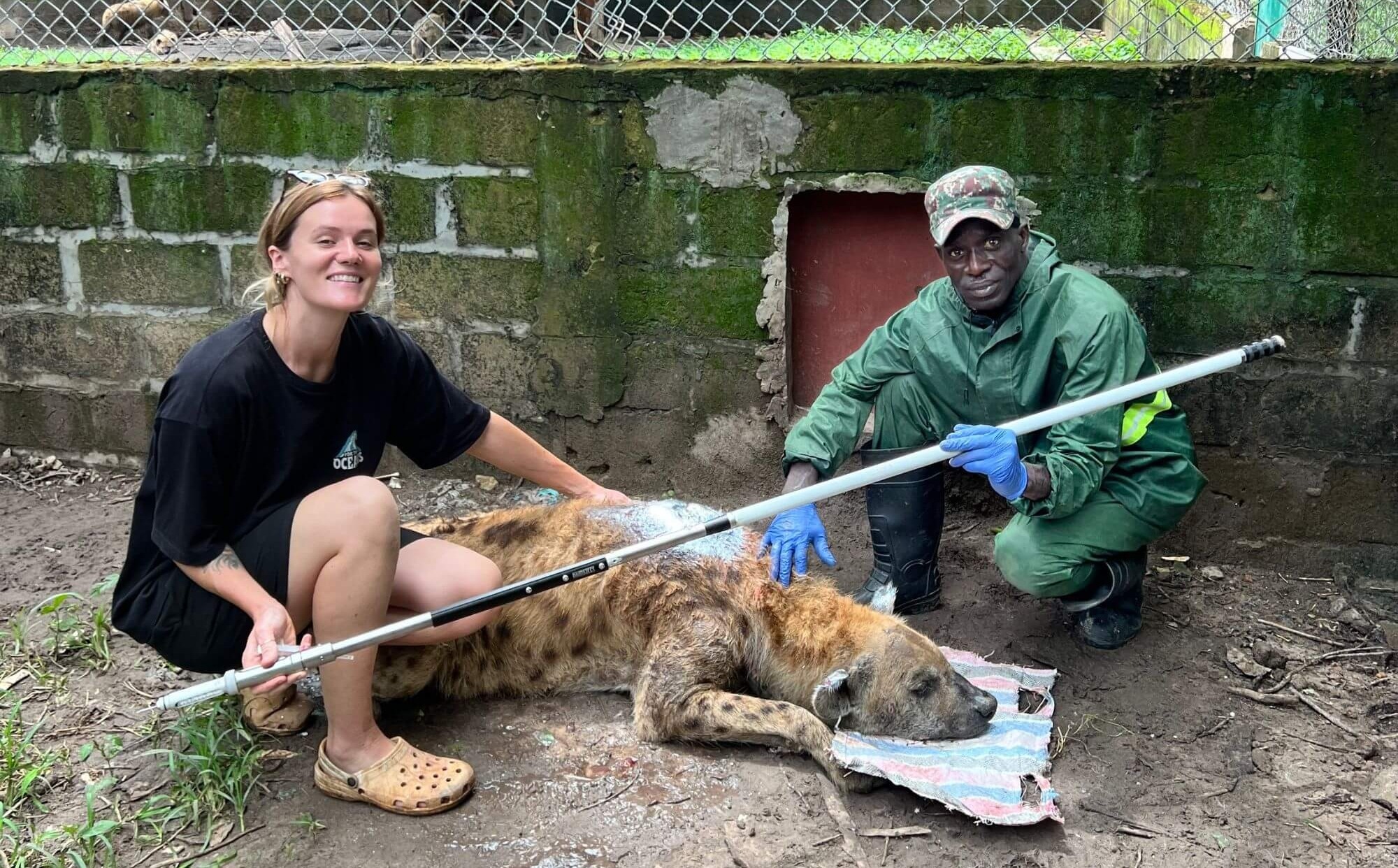
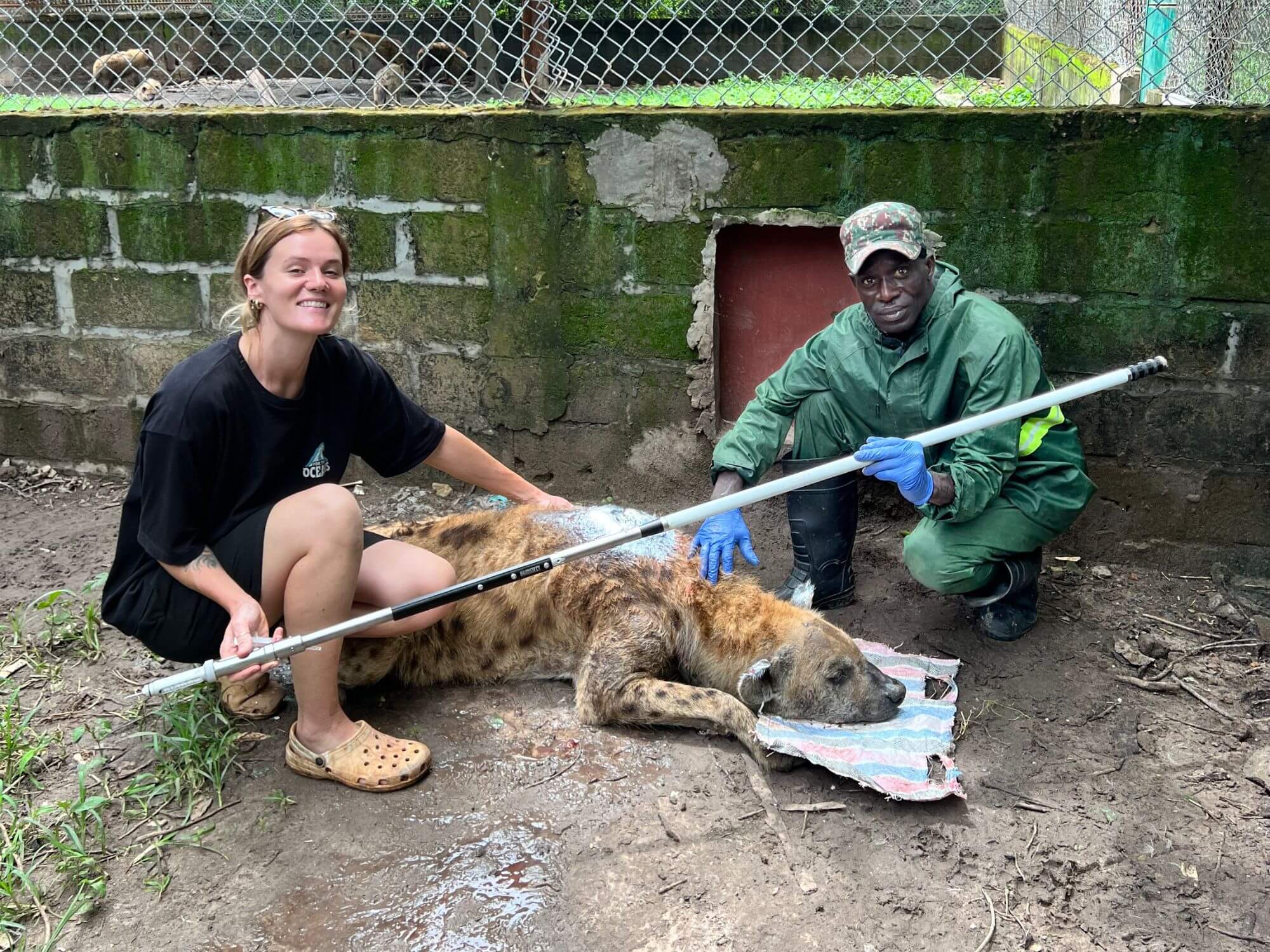
One of the major tasks in Abuko has been caring for the hyenas. Many hyenas suffered from severe maggot wounds caused by screwworm infestations, and the staff was unable to clean the wounds, which meant hyenas often had to be euthanized.
However, with the DANiNJECT jabstick, the team can administer Ivermectin regularly, preventing maggots from setting in wounds.
“This has genuinely made a huge difference. Since we started a year and a half ago, we haven't had to euthanize any hyenas.”
Building new and better facilities for the hyenas is one of the major projects Emily and the foundation are fundraising for, and one of the reasons why Emil also takes on roles as a self-made architect and engineer.
“We have the land we are allowed to use, and the government is happy about the plans, because it will help boost the revenue from tourism. So, once we have the funding to go forward and build that, that will be a big win and a real goosebump moment, I think.”
Picking up on the tiny wins
That she would end up saving hyenas and building out zoo facilities wasn’t exactly the plan when she arrived in The Gambia in 2019 as a long-term volunteer for The Gambia Horse and Donkey Trust. When COVID hit, she decided to stay in The Gambia and ended up as clinical lead and center manager. At the NGO, she crossed paths with Eva Röben, and together they founded Dandeng Kulledeng - The Gambia Wildlife Foundation in 2024.
They have big plans for the foundation, but raising funds to do everything they want to is an uphill battle.
“In all honesty, there is too much work and too little time, but you learn to pick up on the tiny wins. We are getting there. We are making progress, and that’s just really nice to experience.”
.jpeg)