Yorgos Iliopoulos leads the Wolf Emergency Team in Callisto, a Greek NGO dedicated to the study and conservation of large carnivores. As a biologist with a PhD in wolf ecology, he has extensive experience with wolves, experience he now also uses to mitigate human-wildlife conflicts.
“We are mostly dealing with habituated wolves - bold wolves, as we call them. These are animals that follow people, enter villages or cities, kill pets in backyards or, in rare cases, may even approach or bite people,” Yorgos Iliopoulos explains.
As wolf numbers grow, young animals must establish territories of their own. At the same time, easily accessible food such as garbage and stray cats - a favorite among habituated wolves - can attract wolves towards populated areas.
When this develops into a potential risk to people, Yorgos and his colleagues are called in.
“The transmitter dart is essential”
The team has developed a pilot intervention protocol for managing habituated wolves as part of the European LIFE Wild Wolf project, which focuses on the management of bold wolves in Europe. In Greece, Callisto and N.E.C.C.A., a public authority responsible for managing national parks and Natura 2000 sites, run the LIFE project.
“The first step is to remove things that attract wolves into populated areas, such as garbage or stray animals, while also informing the public. This is actually the most difficult task, as it involves many players, including municipalities and the public. When possible and necessary, we also use hazing as a next step to reinforce the wolf’s natural avoidance of people,” Yorgos Iliopoulos explains.
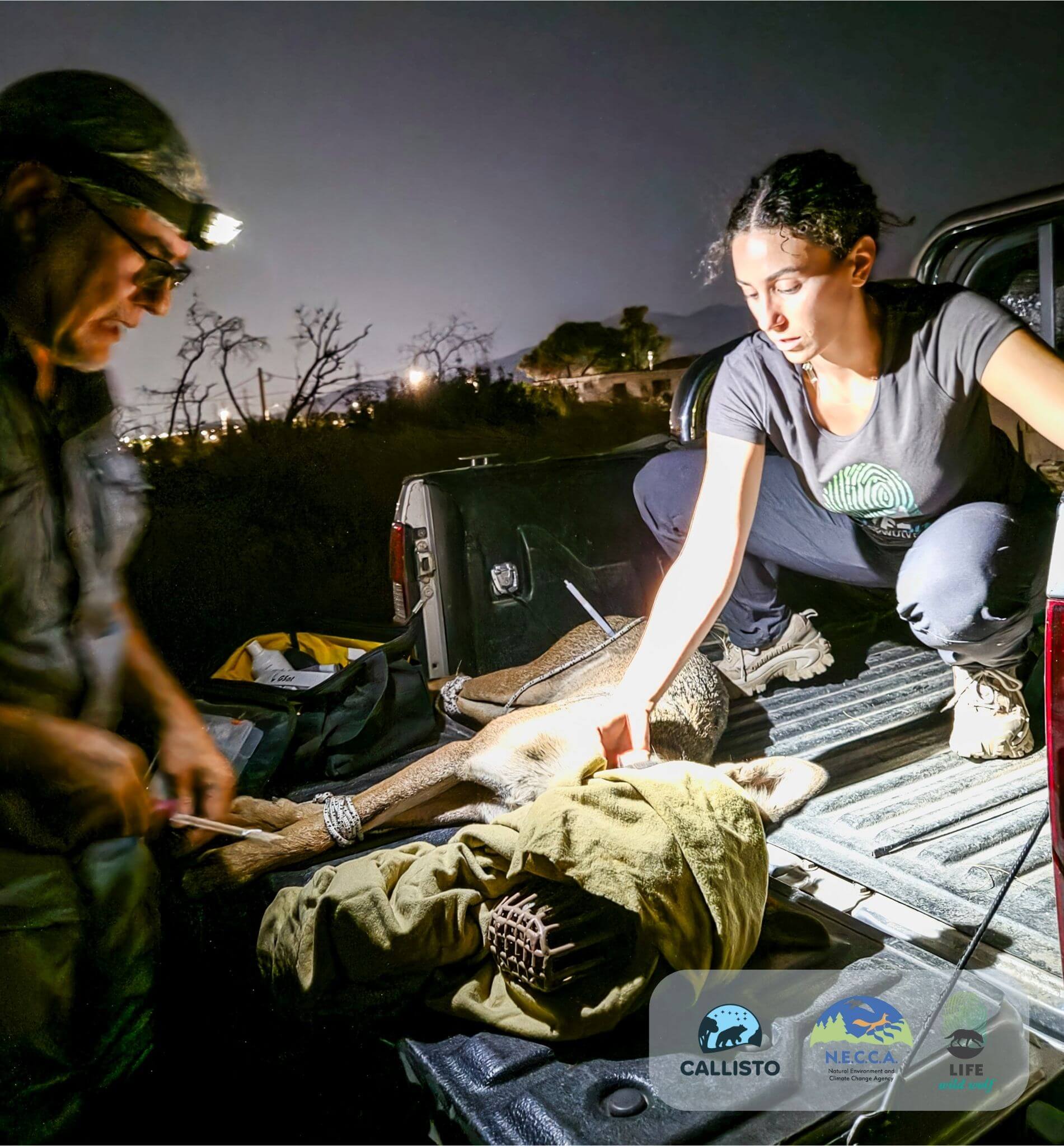
Darting male bold wolf in Varibombi village (Parnitha National Park, Athens) by Callisto and NECCA team (Yorgos Iliopoulos and Galateia Goudeli)
For some animals, this involves capture and immobilization.
“This is where the tranquilizer gun becomes important,” Yorgos says. “It allows you to intervene while and when the wolf is displaying exactly the behavior you want to discourage.”
The team darts the wolf and fits it with a GPS collar, allowing them to follow its movements after release. Capture and handling can already create an unpleasant association with approaching people, and the team may carry out further hazing after release. If the wolf later returns again to populated areas or approaches people, the GPS collar lets the team locate it and intervene again. However, the whole procedure is time-consuming, and results can be mixed depending on the case and the efforts enforced.
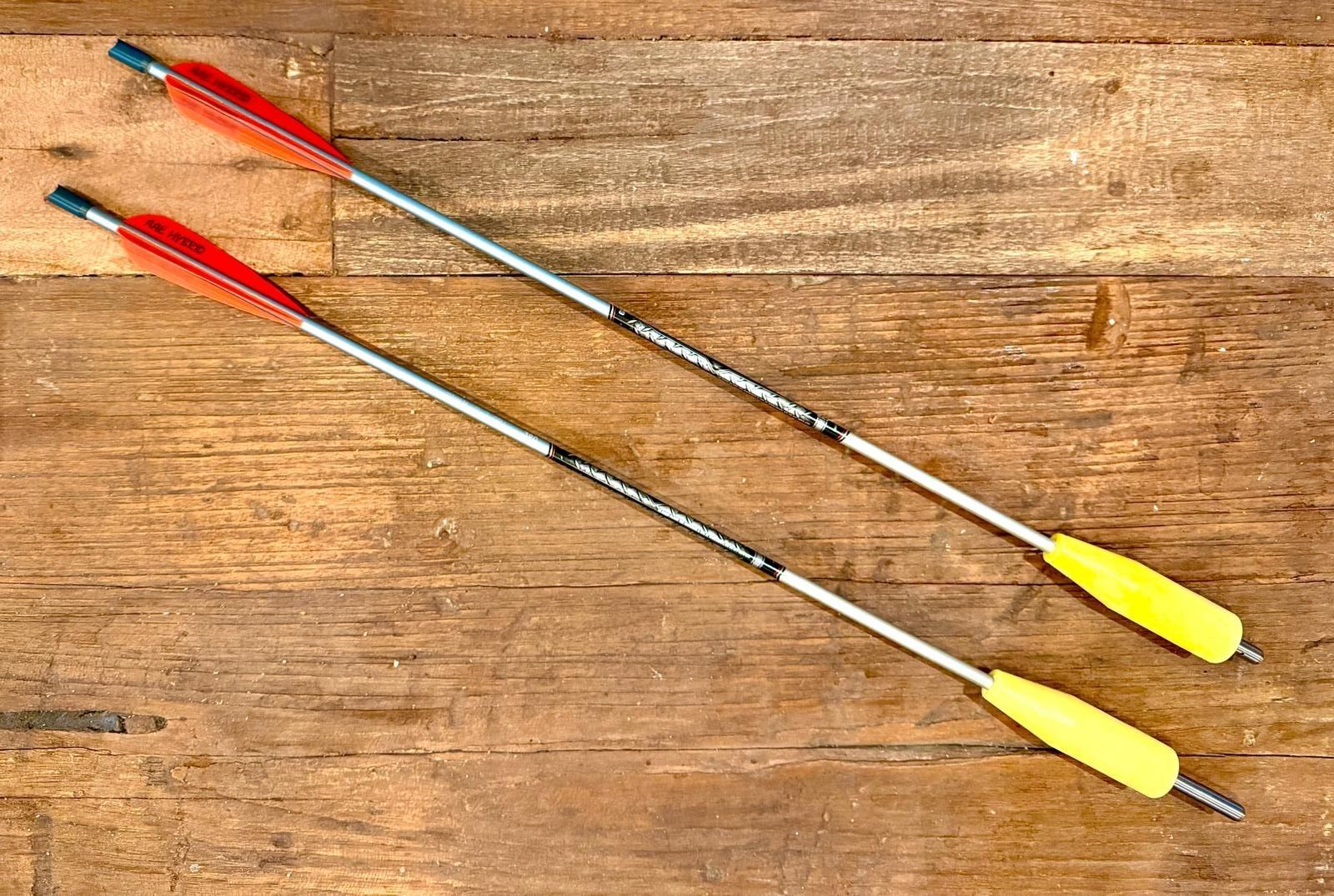
For these operations, the team uses DANiNJECT TrackDart - remote-injection darts equipped with a small VHF transmitter. The transmitter helps the team locate the immobilized animal after darting, even if it runs off to hide.
“I think the transmitter dart is essential,” Yorgos Iliopoulos says. “Without it, carrying out this type of operation would be too risky, because it would be difficult to locate the darted animals, as they may move some hundred meters before they get anesthetized. We wouldn’t do it without the transmitter dart.”
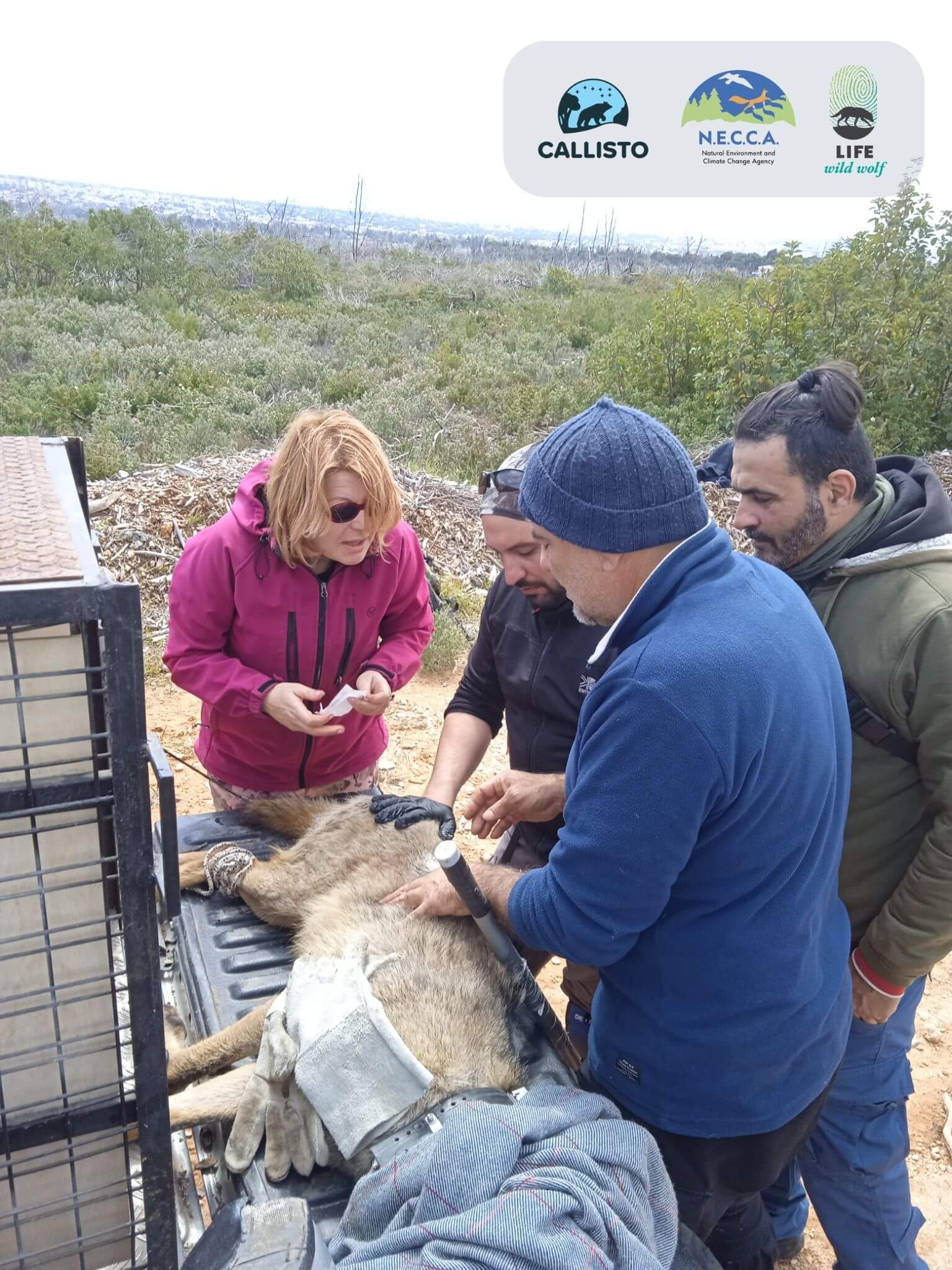
Handling of a bold wolf in Parnitha before it is placed in a crate after its sedation by the Callisto team ( Y. Iliopoulos and V. Theodosiades), veterinarian Eleni Fotopoulou, and NECCA forest ranger Demetris Fallieras.
Eye to eye with a curious wolf
One of Yorgos Iliopoulos’ recent opportunities to use the system came in March 2026.
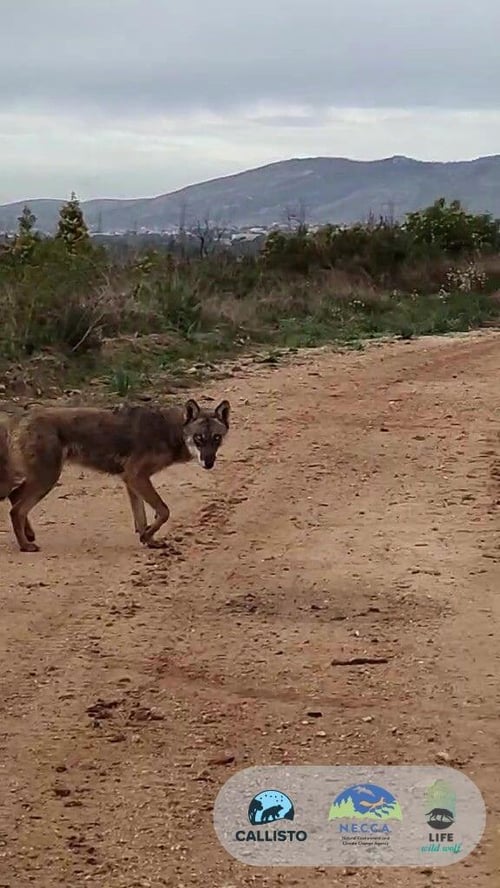
The team had received several reports of wolves following people in the foothills of Parnitha National Park close to Athens, and was searching the area when an unusually curious young female wolf appeared.
“Suddenly, we realized the wolf was following us,” Yorgos recalls. “It was somehow funny, strange, and very unusual.”
His DANiNJECT rifle was still inside the vehicle and had not been prepared, but the wolf stayed nearby long enough for him to get the equipment ready.
“The wolf was so bold that I had time to prepare the dart, pressurize the rifle, and prepare everything for the immobilization. It wasn’t easy when you had the wolf standing there watching you while you were doing all of this.”
The attempt was successful. The wolf was immobilized safely, fitted with a tracking collar, and subsequently released as part of the team’s management program.
A wolf in the village square
Around three months later, Yorgos Iliopoulos received another call. This time, a wolf had entered the village where he lives. N.E.C.C.A. personnel located a wolf close to the center of the village, and the team quickly responded.
“I drove into the center of the village and saw the wolf moving through the village,” he says. “It was around 11 o’clock in the evening, and because it was summer, there were still many people outside.”
The animal approached him near a pizzeria, giving him an opportunity to intervene.
“I was able to dart it with the tranquilizer rifle. Again, we successfully immobilized the wolf, fitted it with a collar, and carried out further hazing.”
For Yorgos, encounters like these demonstrate why reliable remote-injection equipment and the ability to locate a darted animal are so important. Immobilization must not only be effective; the team must also be able to find and monitor the animal quickly once the drug has taken effect.
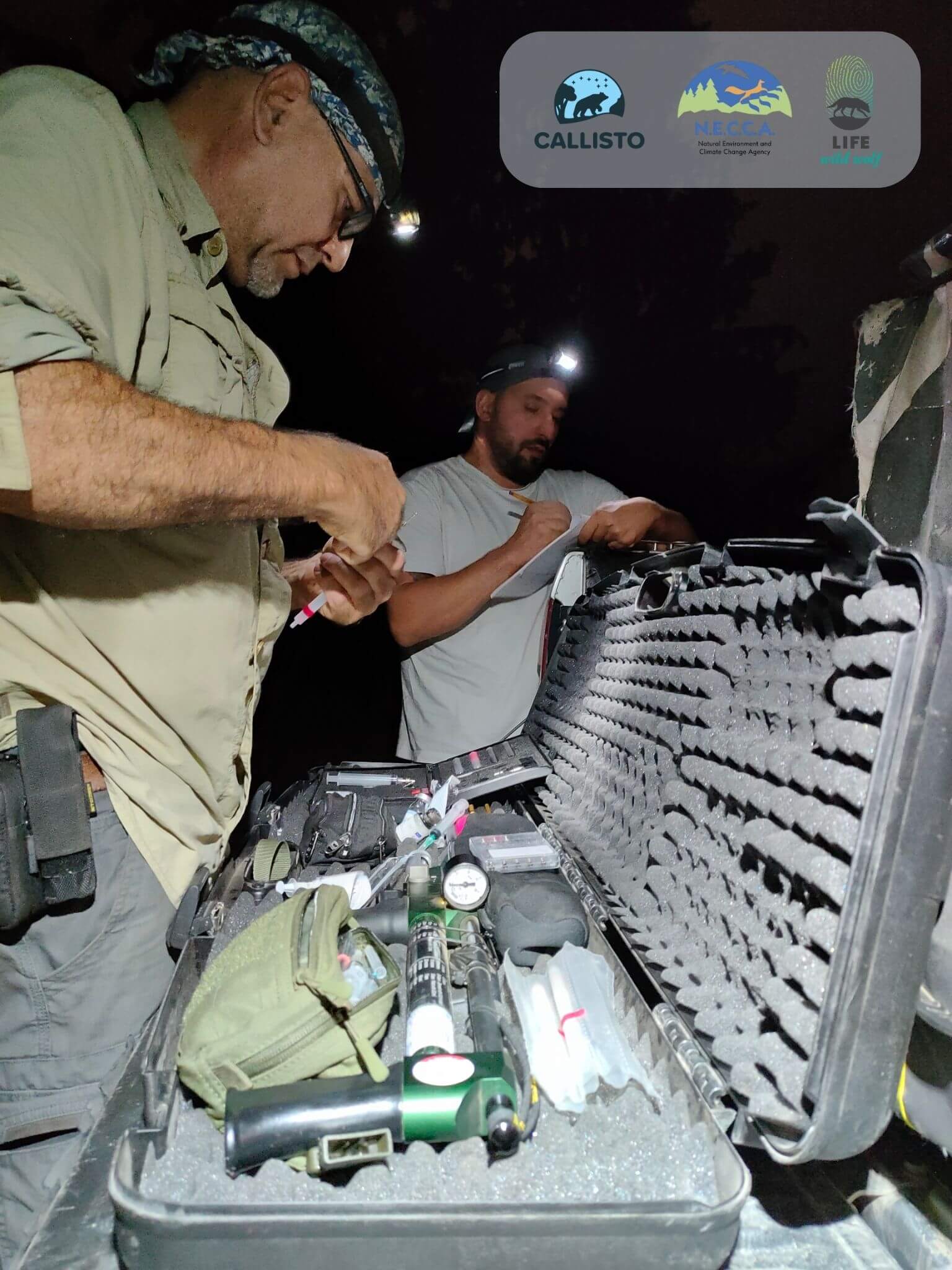
Preparation of a DANiNJECT rifle by the Callisto team (Yorgos Iliopoulos and Vaggelis Theodosiades, forester) during the capture operation of a female bold wolf in Thessaloniki.
Coexistence before culling
When a bold wolf repeatedly approaches people and presents a potential safety risk, the preferred approach is to try non-lethal measures first. If these fail, the next option may be to capture the animal permanently and place it in an appropriate wildlife facility. Only when other measures are unsuccessful, and the animal continues to pose a significant risk, can lethal control become necessary.
A recent case near Thessaloniki, where a wolf had bitten a child, illustrates that approach.
“We were successful in capturing the animal,” Yorgos Iliopoulos says. “But if we had not succeeded, and its behavior had continued to present a danger to people, culling would have been the next step.”
A positive attitude towards wolves
Although human-wolf conflicts are becoming more visible in Greece, Yorgos Iliopoulos says there is still considerable public support for wolves.
Attitudes naturally differ between communities. Livestock farmers and hunters living with wolves may experience the animals very differently from people in urban areas. Even so, Yorgos sees a notable reluctance in Greece to kill wolves unless it is considered absolutely necessary.
He regularly speaks with people around Athens who run or walk in forests where wolves are present. Some have even experienced wolves following them.
“I know people who have been frightened by encounters with wolves but are still positive towards them,” he says. “I spoke with one young man who was grabbed by his shirt by a wolf while he was running. He still didn’t support culling.”
“I think Greece has a long history of a relatively positive attitude towards large carnivores,” and it is one of the reasons that the species was never extirpated from the country.
For Yorgos and his colleagues, that makes effective intervention particularly important. The objective is not simply to remove an animal. It is to understand its behavior, reduce the risk to people and, whenever possible, give the wolf the opportunity to remain part of the wild population.
.jpeg)